Showing posts with label cholesterol. Show all posts
Showing posts with label cholesterol. Show all posts
Saturday, December 28, 2019


Friday, July 26, 2019
Dr. Klaper - Beyond Cholesterol - Freeing Yourself from the Tyranny of Your Cholesterol Numbers
I've seen some of these slides and graphics in talks by Dr. Esselstyn, also, especially the part about "foam" cells developing. It may have been in Dr. Essy's presentation at last year's Plantstock.
Thursday, June 6, 2019
Thursday, April 4, 2019
12 Essential Guidelines For Eating A Plant-Perfect Diet
By Ann Crile Esselstyn
Posted on Mind Body Green
So many years ago when my husband, Dr. Caldwell Esselstyn, published research that showed the power of plant-based, no-oil nutrition to arrest and reverse heart disease, I became the cook and our children the recipients of a plant-based diet. Since then, eating plant based has become part of who we all are, and none of us would ever look back with longing at the world of meat, grease and oil.
I wrote the recipes in my husband’s book, Prevent and Reverse Heart Disease, and our daughter, Jane, wrote the recipes in our son Rip’s second book, My Beef with Meat. With heart disease patients in mind, Jane and I have teamed up and written The Prevent and Reverse Heart Disease Cookbook.
We want to share with you some of the things we have learned along the way and most specifically what we recommend for those with heart disease or type 2 diabetes or for anyone who wants to lose weight.
Here's our 12-step plan for plant-perfect eating.
1. Eat no meat, pork, fish, fowl.
No flesh. None. Every cell in an animal is made of cholesterol. All meat also has saturated fat and animal protein. And research suggests that digesting meat releases a byproduct, trimethylamine oxide (TMAO), that's an even stronger predictor of heart disease than cholesterol. Avoid highly processed fake vegan and soy “meats” because they have a lot of oil in them.
2. Consume no dairy products.
Like meat, all dairy products contain cholesterol, saturated fat, animal protein, and casein. The protein in dairy is one of the most rel¬evant carcinogens identified. Avoid all highly processed vegan and soy cheeses, which are made with a lot of oil and often have added casein!
3. Eliminate oil!
Get rid of all the oil in your cupboards, even if it’s virgin olive oil, so that you can’t use it. Instead of using oil when you stir-fry and sauté vegetables, you can use vegetable broth (no sodium added), water, wine, beer, or vinegar. They all work well. Instead of relying on oil when you bake, use applesauce, apple butter without sugar, puréed prunes, or mashed ripe bananas. Balsamic vinegars are delicious on salad and the flavor-infused ones are stunningly good.
4. Eat whole-grain oats.
Old-fashioned rolled oats or steel-cut oats are good choices. Avoid the more processed “quick-cooking” or “instant” oats. Enjoy whole-grain oats for breakfast any way you can — either as oatmeal or a cold cereal with nondairy milk and fruit, or in the batter for waffles or pancakes.
5. Eat whole grains.
Be sure the word "whole" is in front of wheat or rye in the ingredient list. And be sure the word brown is in front of rice. If you don’t see “whole” in front of the grain on a bread label, it’s likely made with white flour fancied up to sound impressive. Many wonderful whole-grain products are available in the cooler section and the frozen food aisle.
6. Eat greens, especially leafy greens, as well as all the symphony of rainbow-colored vegetables.
Cooked or raw, vegetables are king! Make leafy greens — like kale, collards, and Swiss chard — the nest on which you put your food, mix greens directly into your food, or pile greens on the side of your plate. Mix greens into soup.
If you’re making pasta, add small pieces of kale or other leafy greens to the pot four minutes before the pasta is done then drain the whole pot, and you have a meal ready to go. Use collard leaves instead of burritos in a wrap. Roll a collard green up like a sushi roll. Mix a bunch of greens into pasta sauce and spread it on your whole wheat, no-oil pizza crust, then top with veggies — but, of course, no cheese.
7. Eat beans and lentils!
All beans and lentils are delicious and filling, and are healthy protein sources. Try red lentils in soup. They cook quickly and give the soup a nice color. Put beans in salads. Our hummus, which is made without tahini or oil, has become our “mayonnaise” for spreading on sandwiches, and is our favorite dip for vegetables and crackers. It’s even an ingredient in our favorite salad dressing.
Our main party dish is brown rice and black beans piled high with chopped tomatoes, thawed frozen corn, chopped scallions, water chestnuts, cilantro, chopped arugula, chopped peppers, and topped with salsa.
8. Avoid sugar as much as possible.
Always avoid drinking fruit juice. Eat the whole fruit instead. Read labels and avoid added sugars. Don’t get caught up thinking one sugar is better than another. Avoid them all as much as possible. Save sweets for birthdays or special holiday treats. Instead, put grapes in your freezer for an amazing sweet treat, or freeze bananas or mangoes and blend them in a high-speed blender or a “Yonanas” machine for delicious dairy-free “ice cream.”
Also, a little fruit or dried fruit added to a dish can really help sweeten it up. We use pure maple syrup in some recipes because it has the smallest amount of fructose of all sweeteners.
9. Avoid salt as much as possible.
Look at the government label for the amount of salt (sodium) in a product. No added salt is ideal, or aim for the salt content being equal to the calorie content or less. Instead of salt, add vinegar, lemon juice, lime juice, or low-sodium hot sauces for flavor. You will lose your taste for salt before you know it. Gourmet salts like Celtic salt and sea salt are no better. Don’t get caught up thinking one is better than another. Avoid them all as much as possible.
10. Steer clear of nuts, avocado, and coconut.
Instead, use 1 to 2 tablespoons of ground flaxseeds or chia seeds daily on cereal or in salads — both are excellent for omega-3 fatty acids. An occasional sprinkling of sesame seeds is fine.
11. Drink water!
You can’t go wrong with water. You'll save thousands of dollars and thousands of calories by just drinking water. Absolutely never drink sodas, artificially sweetened or not. Avoid smoothies. Don’t drink your calories; chew them. You can flavor water, soda water, or seltzer water with a splash of orange or apple juice occasionally, but never drink juice by the glass on a regular basis!
12. Read food labels, especially the ingredients.
You'll be surprised how often products that claim to have “zero fat” will list oil among their ingredients. The government allows anything under .5 grams of fat to be labeled fat free. Even products labeled trans fat free can have trans fat in them if you see partially hydrogenated oil as an ingredient! Shocking. Be vigilant!
By Ann Crile Esselstyn
Posted on Mind Body Green
So many years ago when my husband, Dr. Caldwell Esselstyn, published research that showed the power of plant-based, no-oil nutrition to arrest and reverse heart disease, I became the cook and our children the recipients of a plant-based diet. Since then, eating plant based has become part of who we all are, and none of us would ever look back with longing at the world of meat, grease and oil.
I wrote the recipes in my husband’s book, Prevent and Reverse Heart Disease, and our daughter, Jane, wrote the recipes in our son Rip’s second book, My Beef with Meat. With heart disease patients in mind, Jane and I have teamed up and written The Prevent and Reverse Heart Disease Cookbook.
We want to share with you some of the things we have learned along the way and most specifically what we recommend for those with heart disease or type 2 diabetes or for anyone who wants to lose weight.
Here's our 12-step plan for plant-perfect eating.
1. Eat no meat, pork, fish, fowl.
No flesh. None. Every cell in an animal is made of cholesterol. All meat also has saturated fat and animal protein. And research suggests that digesting meat releases a byproduct, trimethylamine oxide (TMAO), that's an even stronger predictor of heart disease than cholesterol. Avoid highly processed fake vegan and soy “meats” because they have a lot of oil in them.
2. Consume no dairy products.
Like meat, all dairy products contain cholesterol, saturated fat, animal protein, and casein. The protein in dairy is one of the most rel¬evant carcinogens identified. Avoid all highly processed vegan and soy cheeses, which are made with a lot of oil and often have added casein!
3. Eliminate oil!
Get rid of all the oil in your cupboards, even if it’s virgin olive oil, so that you can’t use it. Instead of using oil when you stir-fry and sauté vegetables, you can use vegetable broth (no sodium added), water, wine, beer, or vinegar. They all work well. Instead of relying on oil when you bake, use applesauce, apple butter without sugar, puréed prunes, or mashed ripe bananas. Balsamic vinegars are delicious on salad and the flavor-infused ones are stunningly good.
4. Eat whole-grain oats.
Old-fashioned rolled oats or steel-cut oats are good choices. Avoid the more processed “quick-cooking” or “instant” oats. Enjoy whole-grain oats for breakfast any way you can — either as oatmeal or a cold cereal with nondairy milk and fruit, or in the batter for waffles or pancakes.
5. Eat whole grains.
Be sure the word "whole" is in front of wheat or rye in the ingredient list. And be sure the word brown is in front of rice. If you don’t see “whole” in front of the grain on a bread label, it’s likely made with white flour fancied up to sound impressive. Many wonderful whole-grain products are available in the cooler section and the frozen food aisle.
6. Eat greens, especially leafy greens, as well as all the symphony of rainbow-colored vegetables.
Cooked or raw, vegetables are king! Make leafy greens — like kale, collards, and Swiss chard — the nest on which you put your food, mix greens directly into your food, or pile greens on the side of your plate. Mix greens into soup.
If you’re making pasta, add small pieces of kale or other leafy greens to the pot four minutes before the pasta is done then drain the whole pot, and you have a meal ready to go. Use collard leaves instead of burritos in a wrap. Roll a collard green up like a sushi roll. Mix a bunch of greens into pasta sauce and spread it on your whole wheat, no-oil pizza crust, then top with veggies — but, of course, no cheese.
7. Eat beans and lentils!
All beans and lentils are delicious and filling, and are healthy protein sources. Try red lentils in soup. They cook quickly and give the soup a nice color. Put beans in salads. Our hummus, which is made without tahini or oil, has become our “mayonnaise” for spreading on sandwiches, and is our favorite dip for vegetables and crackers. It’s even an ingredient in our favorite salad dressing.
Our main party dish is brown rice and black beans piled high with chopped tomatoes, thawed frozen corn, chopped scallions, water chestnuts, cilantro, chopped arugula, chopped peppers, and topped with salsa.
8. Avoid sugar as much as possible.
Always avoid drinking fruit juice. Eat the whole fruit instead. Read labels and avoid added sugars. Don’t get caught up thinking one sugar is better than another. Avoid them all as much as possible. Save sweets for birthdays or special holiday treats. Instead, put grapes in your freezer for an amazing sweet treat, or freeze bananas or mangoes and blend them in a high-speed blender or a “Yonanas” machine for delicious dairy-free “ice cream.”
Also, a little fruit or dried fruit added to a dish can really help sweeten it up. We use pure maple syrup in some recipes because it has the smallest amount of fructose of all sweeteners.
9. Avoid salt as much as possible.
Look at the government label for the amount of salt (sodium) in a product. No added salt is ideal, or aim for the salt content being equal to the calorie content or less. Instead of salt, add vinegar, lemon juice, lime juice, or low-sodium hot sauces for flavor. You will lose your taste for salt before you know it. Gourmet salts like Celtic salt and sea salt are no better. Don’t get caught up thinking one is better than another. Avoid them all as much as possible.
10. Steer clear of nuts, avocado, and coconut.
Instead, use 1 to 2 tablespoons of ground flaxseeds or chia seeds daily on cereal or in salads — both are excellent for omega-3 fatty acids. An occasional sprinkling of sesame seeds is fine.
11. Drink water!
You can’t go wrong with water. You'll save thousands of dollars and thousands of calories by just drinking water. Absolutely never drink sodas, artificially sweetened or not. Avoid smoothies. Don’t drink your calories; chew them. You can flavor water, soda water, or seltzer water with a splash of orange or apple juice occasionally, but never drink juice by the glass on a regular basis!
12. Read food labels, especially the ingredients.
You'll be surprised how often products that claim to have “zero fat” will list oil among their ingredients. The government allows anything under .5 grams of fat to be labeled fat free. Even products labeled trans fat free can have trans fat in them if you see partially hydrogenated oil as an ingredient! Shocking. Be vigilant!
Saturday, April 21, 2018
Oops, I Did It Again! - Rancho Gordo Bean Club
I must confess - all this simple eating we've been doing lately that includes beans, like Mary's Bean Stew and refried beans over sweet potatoes, even the munching of plain garbanzo beans as a snack during Jeopardy sometimes, made me think about all the dried beans in my pantry. When I make the stew again tomorrow, I plan on using my Crockpot right at the start, and I'll be using one the bags of Ranch Gordo's Yellow Eye beans I have leftover from the last time I belonged to their Bean Club.
Since the stew, I also made up a batch of garbanzo beans, and another batch of Good Mother Stallard but plain, not as a stew or anything.
And I kept thinking of rejoining that bean club, but every time I checked for the past few months it would be "sold out" and not taking new members.
And then the other day I got a link to this article about Steve Sando, the founder and owner of Rancho Gordo:
The Hunt for Mexico’s Heirloom Beans
Rare varieties discovered by Rancho Gordo’s Steve Sando have turned the humble legume into a gourmet food.
OK, I took it as a sign from above, and went right to the Rancho Gordo web site store, where - Lo and Behold! - the Bean Club was, indeed, reopened to new customers! My husband said to go for it (One of his favorite phrases lately), and I signed up again. This is the third or 4th time I signed on to the Club. I LOVE the beans I usually get, except I really dislike lima beans of all varieties, and it seems they would always have a bag of some type of lima bean in the quarterly boxes. Eventually I would have something like 6 bags of lima beans in my bean box in the pantry and I would get so frustrated I would just cancel the whole club. I wish there was a way to tell them NOT to send lima beans.
Sorry about that rant, but I really do dislike lima beans. But just so you know, notice that each mention of them is a link to one of the many varieties of lima /runner beans they sell. I can be a little silly like that.
Anyway, while there I also put an order in for one bag each of 6 different varieties of beans that they sell, beans that were never included in the old Bean Club orders I had received. One of the things about this club, both good and bad, is that the bean offerings changes as beans become available and go out of stock. My all time favorites, that Good Mother Stallard I use in many bean recipes, frequently goes out of stock, so I'm perpetually on the waiting list for it, and when available, hang the price, I order at least 10 more bags of them. It's been a while now since my last order of those beans, and I have only 3 bags left in the closet. The Yellow Eye I'll be using tomorrow is no longer offered, so even if I fall in love with it, unless Steve can find a new grower, it's gone. A hazard of heirlooms, I guess.
So, any day now I expect an email with the tracking number of those beans, and if lucky, another email telling me the first box from my club subscription is on the way.
And I'm glad I jumped in and ordered the Club when I did - it's now listed as "out of stock" again.
It's also a good thing the weather is approaching temps high enough to open windows again (We had frost warnings the other night! In mid-April! AFTER the last-frost date!), because once those beans get here . . .
Monday, November 6, 2017
Updated McDougall Holiday Recipe Guide Released
Dr. McDougall posted the following on his Facebook page today:
Holiday Meal Planning & Recipes (Updated) - Thanksgiving is less than three weeks away. Time to plan ahead. In this article, Mary has laid out a complete menu, shopping list, and time schedule so that you will be able to more easily prepare a successful meal to enjoy with your friends and family.
"This time of year, the Thanksgiving and Christmas Holidays frighten many people who eat a healthy diet. They wonder how to socialize with friends and how to prepare a meal in their home. These two days are supposed to be the largest feasts of the year."

Wednesday, May 3, 2017
Monday, April 24, 2017
Wednesday, March 1, 2017
More by Jeff on That CVD Study
I suggest you read the entire thread, but here's a snippet from one of his posts:
I agree 100% with most all of it including...
no to - - juicing- - (most) supplements- - coconut oil- - eggs- - hi fat diets
and
yes to..- -veggies, - - protein from plant foods- - (fruits)/berries.
The question is on nuts, which we do allow in moderation but they are not recommended for weight loss, which is exactly what the paper recommends, limiting intake to one ounce a day (30 gm) and that "Moderate quantities are required to prevent caloric excess." No argument there.
The real question is liquid vegetable oils like corn, olive & canola oils which I have addressed in this forum in detail and in my talk. I would recommend reading the paper on this issue. It says they found that when substituting these vegetable oils for saturated fat, there was a decrease in the numbers but no evidence on better CVD outcomes.That is exactly what I say in the fats talk and in this forum.
It says olive has some more evidence from some MED studies and PREDIMED Trial, which I discuss in this forum and in my talk. They also say there are no studies comparing the MED to the Okinawan which uses virtually no nuts or oils and has great outcomes too.
Most of what they are discussing is the impact of these oils on those on the SAD moving in our direction or on a current unhealthy MED diet. They are not discussing what happens when someone is on our diet and lifestyle and then adds the oil to them. These are all the same points I make in my writing/talks. Olive oil may be shown to decrease LDL or LDL oxidation when someone is not on a very healthy diet, but it is not going to decrease LDL or LDL oxidation even more when someone is strictly adhering to our recommendations.
It's like the example I use on the nuts studies that show that adding nuts to a typical diet may lower TC 4.5% and LDL 6.5%. Yet, changing ones whole diet to the one we recommend without the use of nuts, lowered TC and LDL 25-30%, Will adding nuts now to that diet lower TC and LDL even more?
Friday, September 30, 2016
Webinar - Atherosclerosis
First, the reading material for the webinar:
And don't forget to sign up for the next few:
Dr. McDougall's homework for you to get the most out of this webinar. READ THE FOLLOWING:More webinar info after the video, so keep scrolling!
1) Chapter on Osteoporosis from McDougall’s Medicine book. Download this chapter for free here.2) May 2013 Newsletter: Who Should Take Cholesterol-lowering Statins? Everyone or No One?https://www.drmcdougall.com/misc/2013nl/may/who.htm
3)May 2011 Newsletter: The Egyptian Mummy Diet Paradoxhttps://www.drmcdougall.com/misc/2011nl/may/egyptian.htm
And don't forget to sign up for the next few:
Thursday, October 6, 2016 at 11 a.m. PST
Title: Dr. John McDougall Discusses Heart Disease
Description: In this live webinar, Dr. John McDougall discusses the topic of Heart Disease.
Presenter: John McDougall, MD
Host: Gustavo Tolosa, DMA
Important Reading Material for this Webinar:
- Chapter on Heart Disease from McDougall’s Medicine: Heart: Disease a Challenging Second Opinion
- Newsletter, August 2012: Heart Surgeons Kill First Man on the Moon: Neil Armstrong
- Newsletter, May 2016: Beware of Interventional Cardiologists (Heart Surgeons)
Thursday, October 13, 2016 at 11 a.m. PST
Title: Dr. Doug Lisle: Anxiety and Panic Attacks, Q&A
Description: In this live webinar, Dr. Lisle answers questions about anxiety and panic attacks.
Presenter: Douglas J. Lisle, Ph.D.
Host: Gustavo Tolosa, DMA
Please watch the webinar on Anxiety and Panic Attacks before you submit any questions. Your question may be answered in the recorded webinar
Thursday, October 20, 2016 at 11 a.m. PST
Title: Dr. John McDougall Discusses Hypertension
Description: In this live webinar, Dr. John McDougall discusses the topic of Elevated Blood Pressure
Presenter: John McDougall, MD
Host: Gustavo Tolosa, DMA
Important Reading Material for this Webinar:
- Chapter on Hypertension from McDougall’s Medicine: Hypertension: a Challenging Second Opinion
- Newsletter, November 2009: How I Treat Patients with Elevated Blood Pressure
Thursday, October 27, 2016 at 11 a.m. PST
Title: Dr. John McDougall Discusses Diabetes
Description: In this live webinar, Dr. John McDougall discusses the cause and treatment of Diabetes
Presenter: John McDougall, MD
Host: Gustavo Tolosa, DMA
Important Reading Material for this Webinar:
- Chapter on Diabetes from McDougall’s Medicine: Diabetes: a Challenging Second Opinion
- Newsletter, December 2009: Simple Care for Diabetes
Sunday, September 25, 2016
Couldn't Get to the ASW? Here are 2 of Dr. McDougall's Talks for Free!
Maybe he'll share some more as time goes on.
These are more formal versions of topics he covered during recent webinars.
Sunday, June 26, 2016
Thursday, May 5, 2016
Saturday, April 30, 2016
Next Scheduled McDougall Webinar - Cholesterol
Thursday, May 5, 2016 at 11 a.m. PST
Title: Cholesterol & Heart Disease
Description: In this live webinar, Dr. McDougall, MD, answers YOUR questions regarding the controversial and even confusing topic of cholesterol and heart disease.
Presenter: Dr. John McDougall, MD
Host: Moderator, Gustavo Tolosa, DMA
Friday, April 29, 2016
Dr. McDougall Webinar: Cardiologists Acting Criminally
Cardiologists Acting Criminally.
In
this live webinar, Dr. McDougall, MD, will discuss why some
cardiologists withhold life-saving information from their patients.
The scary thing is, what Dr. McDougall described as what the cardiologist says to the scared wife is *exactly* what my husband's cardiologist said after his cardiac cath, including the bit about his blockage being so bad he could drop dead at any minute! Almost word-for-word!! His doc refused to even discharge him from the hospital after his cath, made plans for ASAP transfer to the university hospital where he would have his CABG surgery, and insisted he go by ambulance with a full cardiac team. If we knew then what we know now about 100% blockages, he would never had had the surgery and just gone 100% Esselstyn, as he's been doing since his post-op discharge a week later.
Monday, April 18, 2016
Register for the Next 2 McDougall Webinars
Thursday, April 21, 2016 at 11 a.m. PST
Title: Making the Change – Why people resist cost-free health
Description: In this live webinar, Dr. McDougall, MD, will discuss why people are hesitant to change their diet even if they will save thousands of dollars. Q&A will follow.
Thursday, April 28, 2016 at 11 a.m. PST
Title: Cardiologists Acting Criminally
Description: In this live webinar, Dr. McDougall, MD, will discuss why some cardiologists withhold life-saving information from their patients. Q&A will follow.
Friday, April 8, 2016
Why A Plant Based Diet is Best for Heart Disease
A great demonstration on how the heart works, how it's harmed by a SAD diet, and how a plant-rich diet can lower the risk of heart disease. Yes, it's an ad for his new book, The End of Heart Disease, but everything he says goes for the McDougall and Esselstyn food plans, too.
Saturday, February 13, 2016
Specialty Vinegars
I'm not a vinegar lover. Just a taste of it makes me cringe, a teaspoon makes me shudder. I think this is one of the reasons why I've never been much of a salad lover, and why I don't do well with food plans that insist on tons of greens, especially raw ones.
But with my husband's history of CABG and CVD, and the fact that we're both in our 60's now, we try to follow Dr. Esselstyn's rule of a handful of leafy greens 6 times a day. We've had some trouble getting them all in. I don't mind tossing a bit of spinach or kale into my oatmeal, but my husband is not a fan. It took 60 years to just get him to eat the darn oats! He does eat them 3 times and sometimes a 4th time a day. I'm about the same.
We know we have to do better.
Then the other day a question came up in the Essesltyn Nutrition Program Roundtable Facebook community about how much vinegar should be used on those greens, and a small debate started about if the vinegar is a necessity - when and where does the doctor even *say* that?? The answer was that he says it in his monthly seminars at the Cleveland Clinic. Of course, some of us (Yeah, I was one.) wanted to see it somewhere in writing, or some other place where we could check on it. Dr. Esselstyn was giving a talk that same day and one of the community members saw him afterwards and asked. Here was this woman's post about his reply (link only works if you belong to the community):
Latest conversation with Dr Esselstyn tonight. I asked him about the balsamic vinegar., can we use apple cider vinegar, yes on that answer. How about lemon juice....No on that one. He wants the acetic acid in the vinegar in combination with the leafy green veggies, cooked or raw six times a day. This acetic acid helps produce more nitric oxide which is healing to that damaged endothelium cells. Blessings to all!
Thanks, Tricia.
I guess mixing some in my oatmeal, in sandwiches, soups and stews isn't good enough any more. I have to start preparing tons of them and have vinegar on hand to eat with them. I'm not a happy camper. :(
I've been buying balsamic vinegar for a while now to make Jane Esselstyn's 3-2-1 Dressing that my husband loves, and in the past few months I bought a bottle of fig and a bottle of pear flavored ones, too. My husband can't tell any difference. Maybe because they're some cheapo brand the local grocery store sells and aren't too strongly flavored. I got a small bottle of balsamic glaze, hoping that was better. Because of its thickness he says the flavor's a bit stronger, but not worth buying glaze instead of plain old balsamic.
People on-line keep talking about those other vinegars out there, and I really want to learn to like vinegar on my greens, so I decided to buy some of the Napa Valley Natural's Grand Reserve balsamic vinegar. People say this is tastier, sweeter, and way less cringe-inducing because it's only 4% acidity, unlike other vinegars that are 6% or even 8% acidity.

I'll let you know when it gets delivered.
Does anyone have any other hints on how to get those 6-times a day greens in?
Wednesday, December 3, 2014
Smoked Paprika Vegan Cheese
Oil-, nut- and fat-free, too!
You have GOT to make this recipe!
The blog it comes from is called Cooking With Plants, and basically, she takes a standard nooch sauce recipe and adds agar-agar thickened in water to it, pours it into molds (I just used my 3-cup plastic containers), and let it harden.
Be sure you use agar-agar powder and not the flakes. It's much more concentrated. If all you can find are flakes, use three times as much as the recipe calls for to make up the difference.
Watch the stove and keep stirring when heating the agar-agar! I expected it to take a while to thicken, but it was ready in about 2 minutes. And it really helps to use a non-stick saucepan, too. Any that stuck to the sides came right off before water was even added to the pot to clean.
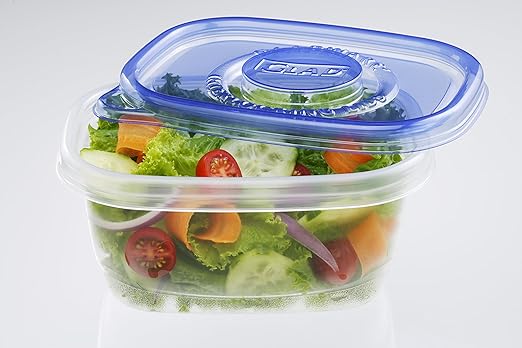
The batch filled 2 of my three-cup containers, so a total of 6 cups of cheese. My containers are similar to these from Glad:
But he said he'll give it a try, and had about a quarter-inch square nibble before declaring it something he would eat only if starving.
But my husband and I love it! Once it's sitting on a slice of bread you don't notice the texture at all, and it tastes great with that little bit of mustard in the sauce. I usually use the wet mustard in the cheese sauces I make, anyway, and wouldn't have even noticed it if not for my picky son pointing it out.
Since I made this the other day, I had about 2 slices and my husband is almost finished with the first container. Since it only keeps about a week in the refrigerator, when I sliced them up I immediately wrapped the second one in plastic wrap, popped it in 2 quart-sized freezer bags and tossed it right into the freezer. To make it easy to take out just a slice or 2 instead of having to defrost the whole brick I put cut-up pieces of plastic between each slice. This is a trick I've been using for years with freezer stuff, like bean burgers or un-meatloaf, or quickbread slices. I take the lids from things like oatmeal containers and cut off the lips, leaving a flat disk, and use those to make non-stick dividers. Works like a charm.
Back to the cheese - my husband has been making sandwiches with them on whole wheat rolls or on whole grain bread with "the works", and I had one slice unadorned to taste, the other between 2 slices of sprouted wheat bread and grilled. This makes the most delicious grilled cheese sandwich. It's dangerous - I can see myself eating 2 or 3 sandwiches a day. It's because of this addictiveness I have to refrain from eating this cheese more than once a week, if I know what's good for me.
But it's SO GOOD!!!
Maybe just one more sandwich tomorrow after we get back from shopping. A quick lunch on another busy vacation day, the first day without rain all week. It'll be my reward if I don't break the budget in Bed, Bath, Beyond.
You have GOT to make this recipe!
The blog it comes from is called Cooking With Plants, and basically, she takes a standard nooch sauce recipe and adds agar-agar thickened in water to it, pours it into molds (I just used my 3-cup plastic containers), and let it harden.
Be sure you use agar-agar powder and not the flakes. It's much more concentrated. If all you can find are flakes, use three times as much as the recipe calls for to make up the difference.
Watch the stove and keep stirring when heating the agar-agar! I expected it to take a while to thicken, but it was ready in about 2 minutes. And it really helps to use a non-stick saucepan, too. Any that stuck to the sides came right off before water was even added to the pot to clean.
The batch filled 2 of my three-cup containers, so a total of 6 cups of cheese. My containers are similar to these from Glad:
I left out the smoked paprika because I was making this cheese primarily for my son, who still uses dairy-based cheese and he doesn't like "spicy." Cheese is the one SAD food he still eats, but his latest cholesterol results are still pretty bad (LDL 105, HDL 48 and trigs 236), so he knows he has to give that up now. I'm glad he's doing this at age 30, not in his late 40's like I did or needs his own CABG like his dad.
He wasn't too thrilled with it for a few reasons. First, the texture - it's slimy. More of a slipperiness to it than slime, but if you've been eating processed American cheese-like food since before you had teeth, it's a lot different than you're used to.
Even without the smoked paprika it was a bit of a kick to it, most likely from the dry mustard. He's like Petey in the Cul De Sac comics:
 |
But my husband and I love it! Once it's sitting on a slice of bread you don't notice the texture at all, and it tastes great with that little bit of mustard in the sauce. I usually use the wet mustard in the cheese sauces I make, anyway, and wouldn't have even noticed it if not for my picky son pointing it out.
Since I made this the other day, I had about 2 slices and my husband is almost finished with the first container. Since it only keeps about a week in the refrigerator, when I sliced them up I immediately wrapped the second one in plastic wrap, popped it in 2 quart-sized freezer bags and tossed it right into the freezer. To make it easy to take out just a slice or 2 instead of having to defrost the whole brick I put cut-up pieces of plastic between each slice. This is a trick I've been using for years with freezer stuff, like bean burgers or un-meatloaf, or quickbread slices. I take the lids from things like oatmeal containers and cut off the lips, leaving a flat disk, and use those to make non-stick dividers. Works like a charm.
Back to the cheese - my husband has been making sandwiches with them on whole wheat rolls or on whole grain bread with "the works", and I had one slice unadorned to taste, the other between 2 slices of sprouted wheat bread and grilled. This makes the most delicious grilled cheese sandwich. It's dangerous - I can see myself eating 2 or 3 sandwiches a day. It's because of this addictiveness I have to refrain from eating this cheese more than once a week, if I know what's good for me.
But it's SO GOOD!!!
Maybe just one more sandwich tomorrow after we get back from shopping. A quick lunch on another busy vacation day, the first day without rain all week. It'll be my reward if I don't break the budget in Bed, Bath, Beyond.
Friday, August 1, 2014
Jeff Novick Tell It Like It Is
Jeff Novick posted this on the McDougall forums. It puts people like me at ease, knowing we're not "failures" per se, just took things as far as we could with diet and still need other medical intervention. Here's the opening paragraph:
The WFPB Diet, Medication Myths and You
 by JeffN » Thu Jul 31, 2014 7:47 pm
Now I don't feel so guilty about finally acquiescing to my doctor and started taking the med he prescribed - at the dose he prescribed - to try get my triglycerides down and HDL up, and agreed to start taking the fibric acid derivative (similar to a statin but works differently) if my labs aren't much more improved in January when I get my next lab work. He suspects it's all tied in with my MCTD somehow.
It's weird how all my major medical problems, like the rare heart disorder Takotsubo Syndrome, to the rare auto-immune disorder of Mixed Connective Tissue Disease, all happened while eating a WFPB, no SOS diet. Then again, I've been described as "weird" my entire life.
Subscribe to:
Posts (Atom)