Meghan has found out that in order to "close" a Facebook community there has to be no members left, and since she doesn't wish to spend hours removing all 11 thousand-plus members, what she's going to do is just archive the Esselstyn Nutrition Program Roundtable community and make it a "secret" group. In other words, no one can join, no one can post, and no one can find it in a search. It also means all the old information will still be there, so if you already do belong, you can go back and do a search in the group, look at the photos, files, etc.
I do like that option better, especially with all the information on there, like messages and advice people have gotten from Dr. Esselstyn, links to videos and articles he did, even just menu advice. I'm glad to see it'll still live on in some form.
Sunday, April 28, 2019


Saturday, April 27, 2019
One Door Closes, Another One Opens
But in this case, "door" means Facebook Community.
The owner of the Esselstyn Nutrition Program Roundtable is closing the community because it takes too much of her time. She doesn't want to just hand it over to someone else to run because the community is so old it still contains some of the original Esselstyn guidelines, things he no longer allows, and she doesn't want erroneous information to confuse new members.
But JoAnn Downey to the rescue! She started up a new Esselstyn "reversal" plan community called 100% Esselstyn Nutrition Forum. It has the same rules as the other community - the discussions and recipes will ONLY be those that adhere to the strictest "reversal" guidelines of Dr. Esselstyn's Prevent and Reverse Heart Disease program. That is, the ones mentioned here:
and here:
Here are the general guidelines for those following the strict reversal program, as compiled by JoAnn Downey:
So, if you still want to join the community, go over to 100% Esselstyn Nutrition Forum and click to join. You'll be asked to answer 2 questions. As soon as JoAnn or one of the other admins reads your answers you'll be approved. You can also just do a search for the community, but yesterday there was a little glitch and it didn't appear in a regular search - you had to click the link near the top of the page that said "Groups" before it appeared.
My thanks to JoAnn for starting this community, but I really wish someone from the Esselstyn program itself would open a message board or FB community, one that deals, like this one and the one Meghan had, with the "reversal" version of the program. So much out there that Ann and Jane Esselstyn do, whether in talks, articles, or their YouTube page, deals with the general Esselstyn program and NOT the "reversal" guidelines. When over half the cookbook, the majority of the recipes done on the YouTube channel, even many recipes from the original Prevent and Reverse Heart Disease book, are unsuited for this version, it would be nice to have that clarification "straight from the horse's mouth," so to speak.
If you still belong to the original community, be aware that on May 1st Meghan is deleting everything, not just "closing" it to new people. If there are any recipes, photos, or any other information you would like to keep from there, get it now, while you still can, because like half the population of the universe in those Avengers movies, once she snaps her fingers it all goes away.
For the McDougallers who aren't aware of the details of the 2 Dr. Esselstyn programs, it's like the difference between the regular McDougall program and the Maximum Weight Loss version - basically the same but MWLP is stricter and doesn't allow or severely restricts some foods that are fine for the regular program. It's like that here, in the differences between the regular Prevent plan and the Reversal programs. All are healthy, but if you're suffering from severe cardio-vascular disease, you need to be super strict and go that extra mile to restore your health.
The owner of the Esselstyn Nutrition Program Roundtable is closing the community because it takes too much of her time. She doesn't want to just hand it over to someone else to run because the community is so old it still contains some of the original Esselstyn guidelines, things he no longer allows, and she doesn't want erroneous information to confuse new members.
But JoAnn Downey to the rescue! She started up a new Esselstyn "reversal" plan community called 100% Esselstyn Nutrition Forum. It has the same rules as the other community - the discussions and recipes will ONLY be those that adhere to the strictest "reversal" guidelines of Dr. Esselstyn's Prevent and Reverse Heart Disease program. That is, the ones mentioned here:
and here:
Here are the general guidelines for those following the strict reversal program, as compiled by JoAnn Downey:
1) NO OIL. Oils cause vasoconstriction and raise blood pressure as well as being damaging to the arterial endothelium (lining). Hidden fats may also be called hydrogenated___, mono and diglycerides, lethicin.
2) Eat starches, non-starchy veggies and a max of 3 fruit servings. Starches are important for satiation so you do not get hungry. Being hungry is not sustainable. Starches are root veggies (potatoes, sweet potatoes), beans/peas/lentils, winter squash and 100% whole grains.
3) Eat (chew) a fist-size (after cooking) serving of high nitrate veggies, with a few drops of balsamic vinegar or other vinegar, six times spaced throughout the day from breakfast to bedtime. This promotes the formation of nitric oxide (NO), the most powerful vasodilator we have, so arteries will dilate to their fullest. Esselstyn's favorite 6 ‘greens’ for NO production are KALE, SPINACH, SWISS CHARD, ARUGULA, BEET GREENS, BEETS (yes, beets!) Dr. E also has a ‘greens’ jingle which mentions bok choy, collard greens, mustard greens, turnip greens, napa cabbage, Brussels sprouts, broccoli, cauliflower, cilantro, parsley and asparagus.
4) Avoid all smoothies and juices. Chew your food.
5) Avoid all high fat foods like nuts, nut butters, coconut, avocado, tofu, coconut, seeds (see flaxseed reference below) An olive or two as a condiment is fine.
6) Avoid processed sugars like agave and maple syrup.
7) Avoid caffeinated coffee.
8) Avoid all animal foods/meat/dairy/eggs
9) Avoid salt in cooking and at the table, and be careful with condiments. The rule of thumb is no more milligrams of sodium in a serving as there are calories. Adding a SMALL amount of a higher sodium condiment to a whole low sodium meal is OK.
RECOMMENDED SUPPLEMENTS Pg. 73-74 Prevent and Reverse Heart Disease
1. Vitamin B12…..I favor 1000mcg daily
(Note….Meghan Brady spoke to Dr. Esselstyn and he said 500mcg for those under 70yo)
2. Vitamin D3…..Check your blood level. If your blood level is normal, it is not needed. If your blood level is below normal, I suggest 1000-2000 IU daily until the low normal blood level is reached. Adjust dosage then to maintain the low normal range.
3. 1-2T ground flaxseed and /or chia seeds daily, maximum of 2T.
Also….notes I have from Jan ’17 (Patricia Slimbarski ) "My take on alcohol stems from being around the entire Esselstyn family. I have had the pleasure of being with them on many events. I have spoken at DR Esselstyn's seminars for almost 2 years now and also spoken at Jane Esselstyn's Woman's Heart Conference and also at RIP Esselstyn 2 Forks Events. They are all on the same plate here and also the same mindset regarding drinking. I have heard them all say that Alcohol is empty calories, no nutritional value and inhibits your burning fat as much as 30 pct and is a KNOWN TOXIN to every organ in your body. Drinking can also induce cancer and heart disease and other organ damage. we are so concerned about maple syrup or molasses and caffeine then why are we not so concerned about drinking something like alcohol?"
So, if you still want to join the community, go over to 100% Esselstyn Nutrition Forum and click to join. You'll be asked to answer 2 questions. As soon as JoAnn or one of the other admins reads your answers you'll be approved. You can also just do a search for the community, but yesterday there was a little glitch and it didn't appear in a regular search - you had to click the link near the top of the page that said "Groups" before it appeared.
My thanks to JoAnn for starting this community, but I really wish someone from the Esselstyn program itself would open a message board or FB community, one that deals, like this one and the one Meghan had, with the "reversal" version of the program. So much out there that Ann and Jane Esselstyn do, whether in talks, articles, or their YouTube page, deals with the general Esselstyn program and NOT the "reversal" guidelines. When over half the cookbook, the majority of the recipes done on the YouTube channel, even many recipes from the original Prevent and Reverse Heart Disease book, are unsuited for this version, it would be nice to have that clarification "straight from the horse's mouth," so to speak.
If you still belong to the original community, be aware that on May 1st Meghan is deleting everything, not just "closing" it to new people. If there are any recipes, photos, or any other information you would like to keep from there, get it now, while you still can, because like half the population of the universe in those Avengers movies, once she snaps her fingers it all goes away.
For the McDougallers who aren't aware of the details of the 2 Dr. Esselstyn programs, it's like the difference between the regular McDougall program and the Maximum Weight Loss version - basically the same but MWLP is stricter and doesn't allow or severely restricts some foods that are fine for the regular program. It's like that here, in the differences between the regular Prevent plan and the Reversal programs. All are healthy, but if you're suffering from severe cardio-vascular disease, you need to be super strict and go that extra mile to restore your health.
Monday, April 15, 2019
Those Upcoming Doug Lisle Sessions
I got a number of emails over the weekend regarding the Better Life Summits series with Dr. Doug Lisle starting April 22nd.
Although the description on the registration/info page says these are LIVE webinars with Dr. Lisle, they're "live" like the Dr. Lisle webinars with Dr. McDougall and Gustavo were - that is, the lecture is pre-recorded and not live at all. There *will* be a Q&A session after the talk, but nothing says how long that will last - will it be only 5 minutes with pre-selected questions or another hour? They didn't say.
But what they *did* say is that they're sorry for any confusion and if people want their money back, they'll do it without problem.
If you did sign up for the series already, like I did, by now you got your log-in information to get to the member section. After you log in, at the bottom of the page, I see a button to apply for your refund.
One of the emails I got listed the subject and title of each talk:
Although the description on the registration/info page says these are LIVE webinars with Dr. Lisle, they're "live" like the Dr. Lisle webinars with Dr. McDougall and Gustavo were - that is, the lecture is pre-recorded and not live at all. There *will* be a Q&A session after the talk, but nothing says how long that will last - will it be only 5 minutes with pre-selected questions or another hour? They didn't say.
But what they *did* say is that they're sorry for any confusion and if people want their money back, they'll do it without problem.
If you did sign up for the series already, like I did, by now you got your log-in information to get to the member section. After you log in, at the bottom of the page, I see a button to apply for your refund.
One of the emails I got listed the subject and title of each talk:
This is a full description of the 6 week course that covers the ideas in The Pleasure Trap
Week 1: Introduction to the basic idea of the pleasure trap. The nature of general motivation and how the pleasure trap works. This material is explained in Chapters 1-3.
Week 2: Here we examine the state of modern medicine, and how it generally fails to address the problems created by the pleasure trap. The nature of the specific diseases and their relationship to diet and lifestyle practices is reviewed, as well as the curious fascination of modern health-seekers with dietary deficiencies. We call this “looking for health in all the wrong places”. This material is explained in Chapters 4-6.
Week 3: A major specific diet-related problem is addressed in detail – weight loss. This is the #1 personal goal of people in the civilized world – an incredible state of affairs when juxtaposed to the motivational triad – a motivational system designed to ensure survival through preferences for high calorie density and energy conservation strategies (which include cooking and grinding foodstuffs). The specific nature of foods to hyperactivate the pleasure pathway is explained. The pleasure traps many faces begin to emerge as we also explore social pressure and its impact on human dietary choices – and how to protect oneself from such pressure. These ideas are explained in chapters 7-9. New insights into the weight loss puzzle will be explored in what Dr. Lisle now terms “the conditioned cram” – the tendency to overeat after already satiated.
Week 4: This week we explore several different issues: the nature of energy conservation instincts, the impact of current dietary practices on our environment, and the importance of sleep. These ideas are explained in chapters 10-12. Information regarding a renewed and greater appreciation for sleep will be discussed.
Week 5: This week we will discuss how extraordinary the pleasure trap is – how it is a largely hidden force that remains unappreciated. Even reasonably aware spokespersons in the WFPB arena fail to fully appreciate its power, and there is a tendency to “psychologize” the struggle that people face. We see here that this problem is not a result of personal failings, or intrapsychic damage done by our personal histories – rather that the pleasure trap is a ubiquitous phenomenon that arose largely in late 20th century America – and thus is an environmental phenomenon, not an intrapsychic-developmental one. We introduce a remarkable method to counteract its effects – the novel, yet ancient, practice of water-only fasting. A greater appreciation for the dilemma of perfectionism vs. gradualism will be discussed (a re-examination of “The Myths of Moderation”). These ideas are explained in Chapters 13-15.
Week 6: In the final week, we will briefly look at the evidence in support of water fasting, but mostly as a metaphor for this entire approach to healthy living. The concept of the pleasure trap in broad perspective will be explained and discussed. The value of living within reasonable limits and parameters – which are considerably more thoughtful and restrictive that the general population would consider prudent – will be explored with consideration given to a variety of perspectives.
Tuesday, April 9, 2019
Dr. Doug Lisle
I love Dr. Lisle almost as much as I do Dr. McDougall. He's homey, he speaks clearly, doesn't toss in a lot of psychology mumbo-jumbo jargon in his talks, and takes the time to really explain the point he tries get across. I try to watch every interview with him, whether's it's with Gustavo as part of Dr. McDougall's webinar series, Chef AJ, as part of whatever she's calling her free interviews at any point in time, or with other people, either as part of a summit or just individual interviews.
For instance, here's the talk he with with Chef AJ as part of the recent Real Truth About Weight Loss series (I have no idea how long this will be available. Usually summit talks vanish after a set length of time.):
And here's his most recent talk with Chef AJ as part of her Healthy Living series:
And recently it was announced that Dr. Lisle is going to be doing a series of 6 LIVE talks called Escaping The Pleasure Trap, which will include material he and Dr. Goldhamer did not include in the book, The Pleasure Trap: Mastering the Hidden Force that Undermines Health & Happiness. You can read what else is included in this package on the Better Life Summits page for the course. Not bad for $99. Let's see if any questions are actually acknowledged and given to Dr. Lisle to answer, unlike most of the other talks he did with Gustavo and AJ.
Now that she's doing videos with Tobi instead of Gustavo, things are a bit different, and AJ has warned that space may be limited, so if you want to be a part of it, don't hesitate because registrations could end at any time. The first talk is scheduled for April 22nd and will be every Monday through Memorial Day.
For instance, here's the talk he with with Chef AJ as part of the recent Real Truth About Weight Loss series (I have no idea how long this will be available. Usually summit talks vanish after a set length of time.):
And here's his most recent talk with Chef AJ as part of her Healthy Living series:
And recently it was announced that Dr. Lisle is going to be doing a series of 6 LIVE talks called Escaping The Pleasure Trap, which will include material he and Dr. Goldhamer did not include in the book, The Pleasure Trap: Mastering the Hidden Force that Undermines Health & Happiness. You can read what else is included in this package on the Better Life Summits page for the course. Not bad for $99. Let's see if any questions are actually acknowledged and given to Dr. Lisle to answer, unlike most of the other talks he did with Gustavo and AJ.
Now that she's doing videos with Tobi instead of Gustavo, things are a bit different, and AJ has warned that space may be limited, so if you want to be a part of it, don't hesitate because registrations could end at any time. The first talk is scheduled for April 22nd and will be every Monday through Memorial Day.
Thursday, April 4, 2019
12 Essential Guidelines For Eating A Plant-Perfect Diet
By Ann Crile Esselstyn
Posted on Mind Body Green
So many years ago when my husband, Dr. Caldwell Esselstyn, published research that showed the power of plant-based, no-oil nutrition to arrest and reverse heart disease, I became the cook and our children the recipients of a plant-based diet. Since then, eating plant based has become part of who we all are, and none of us would ever look back with longing at the world of meat, grease and oil.
I wrote the recipes in my husband’s book, Prevent and Reverse Heart Disease, and our daughter, Jane, wrote the recipes in our son Rip’s second book, My Beef with Meat. With heart disease patients in mind, Jane and I have teamed up and written The Prevent and Reverse Heart Disease Cookbook.
We want to share with you some of the things we have learned along the way and most specifically what we recommend for those with heart disease or type 2 diabetes or for anyone who wants to lose weight.
Here's our 12-step plan for plant-perfect eating.
1. Eat no meat, pork, fish, fowl.
No flesh. None. Every cell in an animal is made of cholesterol. All meat also has saturated fat and animal protein. And research suggests that digesting meat releases a byproduct, trimethylamine oxide (TMAO), that's an even stronger predictor of heart disease than cholesterol. Avoid highly processed fake vegan and soy “meats” because they have a lot of oil in them.
2. Consume no dairy products.
Like meat, all dairy products contain cholesterol, saturated fat, animal protein, and casein. The protein in dairy is one of the most rel¬evant carcinogens identified. Avoid all highly processed vegan and soy cheeses, which are made with a lot of oil and often have added casein!
3. Eliminate oil!
Get rid of all the oil in your cupboards, even if it’s virgin olive oil, so that you can’t use it. Instead of using oil when you stir-fry and sauté vegetables, you can use vegetable broth (no sodium added), water, wine, beer, or vinegar. They all work well. Instead of relying on oil when you bake, use applesauce, apple butter without sugar, puréed prunes, or mashed ripe bananas. Balsamic vinegars are delicious on salad and the flavor-infused ones are stunningly good.
4. Eat whole-grain oats.
Old-fashioned rolled oats or steel-cut oats are good choices. Avoid the more processed “quick-cooking” or “instant” oats. Enjoy whole-grain oats for breakfast any way you can — either as oatmeal or a cold cereal with nondairy milk and fruit, or in the batter for waffles or pancakes.
5. Eat whole grains.
Be sure the word "whole" is in front of wheat or rye in the ingredient list. And be sure the word brown is in front of rice. If you don’t see “whole” in front of the grain on a bread label, it’s likely made with white flour fancied up to sound impressive. Many wonderful whole-grain products are available in the cooler section and the frozen food aisle.
6. Eat greens, especially leafy greens, as well as all the symphony of rainbow-colored vegetables.
Cooked or raw, vegetables are king! Make leafy greens — like kale, collards, and Swiss chard — the nest on which you put your food, mix greens directly into your food, or pile greens on the side of your plate. Mix greens into soup.
If you’re making pasta, add small pieces of kale or other leafy greens to the pot four minutes before the pasta is done then drain the whole pot, and you have a meal ready to go. Use collard leaves instead of burritos in a wrap. Roll a collard green up like a sushi roll. Mix a bunch of greens into pasta sauce and spread it on your whole wheat, no-oil pizza crust, then top with veggies — but, of course, no cheese.
7. Eat beans and lentils!
All beans and lentils are delicious and filling, and are healthy protein sources. Try red lentils in soup. They cook quickly and give the soup a nice color. Put beans in salads. Our hummus, which is made without tahini or oil, has become our “mayonnaise” for spreading on sandwiches, and is our favorite dip for vegetables and crackers. It’s even an ingredient in our favorite salad dressing.
Our main party dish is brown rice and black beans piled high with chopped tomatoes, thawed frozen corn, chopped scallions, water chestnuts, cilantro, chopped arugula, chopped peppers, and topped with salsa.
8. Avoid sugar as much as possible.
Always avoid drinking fruit juice. Eat the whole fruit instead. Read labels and avoid added sugars. Don’t get caught up thinking one sugar is better than another. Avoid them all as much as possible. Save sweets for birthdays or special holiday treats. Instead, put grapes in your freezer for an amazing sweet treat, or freeze bananas or mangoes and blend them in a high-speed blender or a “Yonanas” machine for delicious dairy-free “ice cream.”
Also, a little fruit or dried fruit added to a dish can really help sweeten it up. We use pure maple syrup in some recipes because it has the smallest amount of fructose of all sweeteners.
9. Avoid salt as much as possible.
Look at the government label for the amount of salt (sodium) in a product. No added salt is ideal, or aim for the salt content being equal to the calorie content or less. Instead of salt, add vinegar, lemon juice, lime juice, or low-sodium hot sauces for flavor. You will lose your taste for salt before you know it. Gourmet salts like Celtic salt and sea salt are no better. Don’t get caught up thinking one is better than another. Avoid them all as much as possible.
10. Steer clear of nuts, avocado, and coconut.
Instead, use 1 to 2 tablespoons of ground flaxseeds or chia seeds daily on cereal or in salads — both are excellent for omega-3 fatty acids. An occasional sprinkling of sesame seeds is fine.
11. Drink water!
You can’t go wrong with water. You'll save thousands of dollars and thousands of calories by just drinking water. Absolutely never drink sodas, artificially sweetened or not. Avoid smoothies. Don’t drink your calories; chew them. You can flavor water, soda water, or seltzer water with a splash of orange or apple juice occasionally, but never drink juice by the glass on a regular basis!
12. Read food labels, especially the ingredients.
You'll be surprised how often products that claim to have “zero fat” will list oil among their ingredients. The government allows anything under .5 grams of fat to be labeled fat free. Even products labeled trans fat free can have trans fat in them if you see partially hydrogenated oil as an ingredient! Shocking. Be vigilant!
By Ann Crile Esselstyn
Posted on Mind Body Green
So many years ago when my husband, Dr. Caldwell Esselstyn, published research that showed the power of plant-based, no-oil nutrition to arrest and reverse heart disease, I became the cook and our children the recipients of a plant-based diet. Since then, eating plant based has become part of who we all are, and none of us would ever look back with longing at the world of meat, grease and oil.
I wrote the recipes in my husband’s book, Prevent and Reverse Heart Disease, and our daughter, Jane, wrote the recipes in our son Rip’s second book, My Beef with Meat. With heart disease patients in mind, Jane and I have teamed up and written The Prevent and Reverse Heart Disease Cookbook.
We want to share with you some of the things we have learned along the way and most specifically what we recommend for those with heart disease or type 2 diabetes or for anyone who wants to lose weight.
Here's our 12-step plan for plant-perfect eating.
1. Eat no meat, pork, fish, fowl.
No flesh. None. Every cell in an animal is made of cholesterol. All meat also has saturated fat and animal protein. And research suggests that digesting meat releases a byproduct, trimethylamine oxide (TMAO), that's an even stronger predictor of heart disease than cholesterol. Avoid highly processed fake vegan and soy “meats” because they have a lot of oil in them.
2. Consume no dairy products.
Like meat, all dairy products contain cholesterol, saturated fat, animal protein, and casein. The protein in dairy is one of the most rel¬evant carcinogens identified. Avoid all highly processed vegan and soy cheeses, which are made with a lot of oil and often have added casein!
3. Eliminate oil!
Get rid of all the oil in your cupboards, even if it’s virgin olive oil, so that you can’t use it. Instead of using oil when you stir-fry and sauté vegetables, you can use vegetable broth (no sodium added), water, wine, beer, or vinegar. They all work well. Instead of relying on oil when you bake, use applesauce, apple butter without sugar, puréed prunes, or mashed ripe bananas. Balsamic vinegars are delicious on salad and the flavor-infused ones are stunningly good.
4. Eat whole-grain oats.
Old-fashioned rolled oats or steel-cut oats are good choices. Avoid the more processed “quick-cooking” or “instant” oats. Enjoy whole-grain oats for breakfast any way you can — either as oatmeal or a cold cereal with nondairy milk and fruit, or in the batter for waffles or pancakes.
5. Eat whole grains.
Be sure the word "whole" is in front of wheat or rye in the ingredient list. And be sure the word brown is in front of rice. If you don’t see “whole” in front of the grain on a bread label, it’s likely made with white flour fancied up to sound impressive. Many wonderful whole-grain products are available in the cooler section and the frozen food aisle.
6. Eat greens, especially leafy greens, as well as all the symphony of rainbow-colored vegetables.
Cooked or raw, vegetables are king! Make leafy greens — like kale, collards, and Swiss chard — the nest on which you put your food, mix greens directly into your food, or pile greens on the side of your plate. Mix greens into soup.
If you’re making pasta, add small pieces of kale or other leafy greens to the pot four minutes before the pasta is done then drain the whole pot, and you have a meal ready to go. Use collard leaves instead of burritos in a wrap. Roll a collard green up like a sushi roll. Mix a bunch of greens into pasta sauce and spread it on your whole wheat, no-oil pizza crust, then top with veggies — but, of course, no cheese.
7. Eat beans and lentils!
All beans and lentils are delicious and filling, and are healthy protein sources. Try red lentils in soup. They cook quickly and give the soup a nice color. Put beans in salads. Our hummus, which is made without tahini or oil, has become our “mayonnaise” for spreading on sandwiches, and is our favorite dip for vegetables and crackers. It’s even an ingredient in our favorite salad dressing.
Our main party dish is brown rice and black beans piled high with chopped tomatoes, thawed frozen corn, chopped scallions, water chestnuts, cilantro, chopped arugula, chopped peppers, and topped with salsa.
8. Avoid sugar as much as possible.
Always avoid drinking fruit juice. Eat the whole fruit instead. Read labels and avoid added sugars. Don’t get caught up thinking one sugar is better than another. Avoid them all as much as possible. Save sweets for birthdays or special holiday treats. Instead, put grapes in your freezer for an amazing sweet treat, or freeze bananas or mangoes and blend them in a high-speed blender or a “Yonanas” machine for delicious dairy-free “ice cream.”
Also, a little fruit or dried fruit added to a dish can really help sweeten it up. We use pure maple syrup in some recipes because it has the smallest amount of fructose of all sweeteners.
9. Avoid salt as much as possible.
Look at the government label for the amount of salt (sodium) in a product. No added salt is ideal, or aim for the salt content being equal to the calorie content or less. Instead of salt, add vinegar, lemon juice, lime juice, or low-sodium hot sauces for flavor. You will lose your taste for salt before you know it. Gourmet salts like Celtic salt and sea salt are no better. Don’t get caught up thinking one is better than another. Avoid them all as much as possible.
10. Steer clear of nuts, avocado, and coconut.
Instead, use 1 to 2 tablespoons of ground flaxseeds or chia seeds daily on cereal or in salads — both are excellent for omega-3 fatty acids. An occasional sprinkling of sesame seeds is fine.
11. Drink water!
You can’t go wrong with water. You'll save thousands of dollars and thousands of calories by just drinking water. Absolutely never drink sodas, artificially sweetened or not. Avoid smoothies. Don’t drink your calories; chew them. You can flavor water, soda water, or seltzer water with a splash of orange or apple juice occasionally, but never drink juice by the glass on a regular basis!
12. Read food labels, especially the ingredients.
You'll be surprised how often products that claim to have “zero fat” will list oil among their ingredients. The government allows anything under .5 grams of fat to be labeled fat free. Even products labeled trans fat free can have trans fat in them if you see partially hydrogenated oil as an ingredient! Shocking. Be vigilant!
Friday, March 22, 2019
Costco Fail
I am so depressed. When I heard 2 years ago that Costco was building in our city, I rejoiced, knowing that finally I could get all this fantastic produce that dozens of you on-line people show in your shopping haul videos. Well, it opened the second week of March, and I was finally able to get there this past Wednesday.
They should have stayed away.
As soon as we walked in the lobby, the smell of fish and chicken hit us, even with the front doors open and blowers on. Not a good sign. We were able to do a walk-though without signing up, but was told after March one would need to be a member just to enter the store.
So, in we go. The first things we see are aisles and aisles of junk food - chips, cookies, granola, candy, many of them with the organic label. Big whoop. Apple computers, priced higher than Best Buy sells them for. Hmmm. My spidy senses were tingling, and not in a good way.
Passed by health and beauty aids, soda, bottled water, paper products, and finally to the basic groceries, where again, it was mostly packaged junk food. We saw some Quaker old-fashioned oats we might be interested in, but the only other oatmeal was boxes of flavored instant, store brand. Plenty of sugary crap cereal, though. Rice? A few varieties of white, all in 25 pound bags, one display of 3 pound bags of brown but more expensive than I had seen elsewhere, A few types of name brand canned beans but no low-sodium. Only 1 offering of dried beans, a 3-pound bag of pintos, again more expensive than a local chain grocery store sells them for.
Moving out of the packaged foods, into frozen. 6 aisles of processed junk foods disguised as meals and snacks, any kind of meat and fish imaginable, including sides of beef and pigs hanging on hooks. Ugh! Some 5 pound bags of broccoli or green beans (the only frozen veggies) and another few shelves with frozen fruits. The ice creams took up 6 display cases.
Maybe produce will have things I can eat. But where's the produce department? The entire back of the store is fish, packaged fresh meats, and deli items. Wait! Is that a box of tomatoes I see? Yes, plastic boxes of cherry tomatoes, but very poor quality and not so good a price. Some pint boxes of blackberries are next, then in a corner by the bread is a display of russets and sweet potatoes and around the other side of the table, oranges. Nothing is organic. Where are all the greens people on-line brag about? We continue walking all over the fresh food section but not one green leaf could be found, either fresh or packaged. We asked 3 different workers, and none of them were able to show us where leafy greens could be found, only frozen. One worker walked with us over 15 minutes, and *she* couldn't find any either! (sigh)
We sadly trodded through the rest of the store. Appliances - the only Instant Pot was the Nova, only $2 cheaper than Amazon. The one air fryer was an off brand that Amazon only has through vendors, again at a price higher than that store. One electric toothbrush, one hair dryer, a few toaster ovens, a chest freezer and dorm sized refrigerators (both no-name brands). We didn't even bother picking through the clothing - t-shirts, straw hats, and some children's pajamas. I saw one table with books on it but it was in such a disarray it wasn't worth trying to browse through.
As we were leaving, the guy who let us in asked how we liked it. We shook our heads and said sorry, we won't be joining. He promised us the turnover in items is fast, that next week there will be a whole different selection to choose from. Since we couldn't find even 5 items we wanted in this walk-though, I doubt they would have much more next week, and there's a good chance they would have even less.
Oh, well.
They should have stayed away.
As soon as we walked in the lobby, the smell of fish and chicken hit us, even with the front doors open and blowers on. Not a good sign. We were able to do a walk-though without signing up, but was told after March one would need to be a member just to enter the store.
So, in we go. The first things we see are aisles and aisles of junk food - chips, cookies, granola, candy, many of them with the organic label. Big whoop. Apple computers, priced higher than Best Buy sells them for. Hmmm. My spidy senses were tingling, and not in a good way.
Passed by health and beauty aids, soda, bottled water, paper products, and finally to the basic groceries, where again, it was mostly packaged junk food. We saw some Quaker old-fashioned oats we might be interested in, but the only other oatmeal was boxes of flavored instant, store brand. Plenty of sugary crap cereal, though. Rice? A few varieties of white, all in 25 pound bags, one display of 3 pound bags of brown but more expensive than I had seen elsewhere, A few types of name brand canned beans but no low-sodium. Only 1 offering of dried beans, a 3-pound bag of pintos, again more expensive than a local chain grocery store sells them for.
Moving out of the packaged foods, into frozen. 6 aisles of processed junk foods disguised as meals and snacks, any kind of meat and fish imaginable, including sides of beef and pigs hanging on hooks. Ugh! Some 5 pound bags of broccoli or green beans (the only frozen veggies) and another few shelves with frozen fruits. The ice creams took up 6 display cases.
Maybe produce will have things I can eat. But where's the produce department? The entire back of the store is fish, packaged fresh meats, and deli items. Wait! Is that a box of tomatoes I see? Yes, plastic boxes of cherry tomatoes, but very poor quality and not so good a price. Some pint boxes of blackberries are next, then in a corner by the bread is a display of russets and sweet potatoes and around the other side of the table, oranges. Nothing is organic. Where are all the greens people on-line brag about? We continue walking all over the fresh food section but not one green leaf could be found, either fresh or packaged. We asked 3 different workers, and none of them were able to show us where leafy greens could be found, only frozen. One worker walked with us over 15 minutes, and *she* couldn't find any either! (sigh)
We sadly trodded through the rest of the store. Appliances - the only Instant Pot was the Nova, only $2 cheaper than Amazon. The one air fryer was an off brand that Amazon only has through vendors, again at a price higher than that store. One electric toothbrush, one hair dryer, a few toaster ovens, a chest freezer and dorm sized refrigerators (both no-name brands). We didn't even bother picking through the clothing - t-shirts, straw hats, and some children's pajamas. I saw one table with books on it but it was in such a disarray it wasn't worth trying to browse through.
As we were leaving, the guy who let us in asked how we liked it. We shook our heads and said sorry, we won't be joining. He promised us the turnover in items is fast, that next week there will be a whole different selection to choose from. Since we couldn't find even 5 items we wanted in this walk-though, I doubt they would have much more next week, and there's a good chance they would have even less.
Oh, well.
Thursday, March 21, 2019
Thursday, March 14, 2019
Dr Esselstyn - Real Truth About Weight Loss Interview
The Real Truth About Weight loss summit starts this weekend. It looks like Dr. Esselstyn got hold of his interview early and had posted it to his Facebook. Here's the YouTube of it, for those who, like me, needs the captioning.
Thursday, February 28, 2019
Harmony House Pantry Stuffer Sampler
I've written about Harmony House and their dehydrated products before. Because I've been a fairly steady customer, they mail me codes for special sales now and then. Last week they sent a limited edition code for 28% off all products.
Whoa! That's a big discount!
Well, I took advantage of that code to finally order the Pantry Stuffer Sampler - 12 quart containers, each one with a different dehydrated soup or chili mix.

 When I got my winter veggies a few months ago, along with my order they sent a free sample of their "Unbelievable Black Bean Chili" mix.
At only 2 1/2 ounces, it would barely make up a lunch-sized bowl, so I kept putting it off, telling myself that someday I would buy a larger sized package and add this to it. Well, that day finally came.
The directions on the packet and the jar were slightly different, but not by much. The packet had suggested using a slow cooker for best flavor, so out came my trusty 46 year old Crockpot. In it went the correct amount of water to allow for both the packet and a decent amount of the jarred chili mix. It looked like a bit too much liquid for the amount of mix, so I added an additional half cup of the chili mix. I popped the lid onto my Crockpot, flipped the switch to High, and let it cook. The package says to cook 3-4 hours in a 2 quart slow-cooker, and the company just happens to sell just such a Crockpot on their web site and currently it's $5 cheaper than on Amazon.
After 5 hours on High heat, the chili ingredients were cooked well enough, but there didn't seem to be enough "solids" for the meal (I was making enough for 10 servings, according to the labels) and there was way too much liquid in the pot. I poured everything into a pot and added yet another half cup of chili mix and followed the stovetop directions. After 15 minutes it still looked like there wouldn't be enough food for 3 hungry adults and added a can of black beans, stirred them in, and called it a day. To bulk up the meal I took some leftover cornbread out of the freezer, heated them in the microwave, sliced them, then served the soupy chili over them.
Sorry, no photo, because by now my guys were getting cranky and wanted to eat.
Although it was still very watery, the chili did taste good. The chili's saucy part was more of a brown gravy than anything associated with our usual tomato-based chili recipes, even though there were tomatoes as part of the chili mix. An insert with the sampler box listed various suggested seasonings that the store also sells to use with each chili or soup mix, even though each quart jar doesn't call for anything other than water to make the meals. For the black bean chili they suggested their Tomato Plus seasoning. Next time I'll add the main ingredients of that blend - tomato powder and nutritional yeast, All the other seasonings they sell contain oil and added sweeteners, so purchasing any of them is not an option.
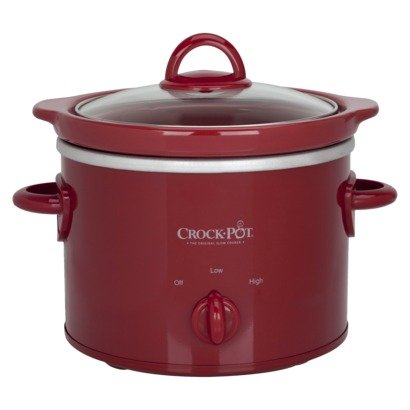
 I suspect the problem was the age of my Crockpot. I got this as a wedding gift so long ago (1977) the pots were set at lower temperatures. The newer (um, maybe 1990's and above?) pots cook at much higher temperatures, so high that liquid cooked on High heat will now boil. I remember how frustrated cooks and cookbook authors were when the temps were increased - every recipe had to be adjusted to reflect the newer temps. According to this article, the High temps are now around 300º. My old pot never got hot enough to boil, so never even reached 212º. The newer, larger one, that I used here in this old post did boil - a lot. I wish I had more storage space in this apartment - if I did, I would gladly buy the 2 quart pot in dark red.
Whoa! That's a big discount!
Well, I took advantage of that code to finally order the Pantry Stuffer Sampler - 12 quart containers, each one with a different dehydrated soup or chili mix.
When I got my winter veggies a few months ago, along with my order they sent a free sample of their "Unbelievable Black Bean Chili" mix. At only 2 1/2 ounces, it would barely make up a lunch-sized bowl, so I kept putting it off, telling myself that someday I would buy a larger sized package and add this to it. Well, that day finally came.
The directions on the packet and the jar were slightly different, but not by much. The packet had suggested using a slow cooker for best flavor, so out came my trusty 46 year old Crockpot. In it went the correct amount of water to allow for both the packet and a decent amount of the jarred chili mix. It looked like a bit too much liquid for the amount of mix, so I added an additional half cup of the chili mix. I popped the lid onto my Crockpot, flipped the switch to High, and let it cook. The package says to cook 3-4 hours in a 2 quart slow-cooker, and the company just happens to sell just such a Crockpot on their web site and currently it's $5 cheaper than on Amazon.
After 5 hours on High heat, the chili ingredients were cooked well enough, but there didn't seem to be enough "solids" for the meal (I was making enough for 10 servings, according to the labels) and there was way too much liquid in the pot. I poured everything into a pot and added yet another half cup of chili mix and followed the stovetop directions. After 15 minutes it still looked like there wouldn't be enough food for 3 hungry adults and added a can of black beans, stirred them in, and called it a day. To bulk up the meal I took some leftover cornbread out of the freezer, heated them in the microwave, sliced them, then served the soupy chili over them.
Sorry, no photo, because by now my guys were getting cranky and wanted to eat.
Although it was still very watery, the chili did taste good. The chili's saucy part was more of a brown gravy than anything associated with our usual tomato-based chili recipes, even though there were tomatoes as part of the chili mix. An insert with the sampler box listed various suggested seasonings that the store also sells to use with each chili or soup mix, even though each quart jar doesn't call for anything other than water to make the meals. For the black bean chili they suggested their Tomato Plus seasoning. Next time I'll add the main ingredients of that blend - tomato powder and nutritional yeast, All the other seasonings they sell contain oil and added sweeteners, so purchasing any of them is not an option.
But for now, when I make up more meals from this sampler, I'll stick to to the stovetop directions and hope that by doing so more of the liquid boils down and chilis come out a bit thicker. If not, maybe I'll make a slurry of cornstarch and water to add in before the end to thicken it all.
Wednesday, February 20, 2019
Gustavo Interviews Dr. and Ann Esselstyn - Questions Answered
They touch on greens 6 times a day and the need for using a few DROPS of balsamic vinegar, why no juices or smoothies, and more!
Subscribe to:
Posts (Atom)